Navigara
The performance layer for modern engineering. AI-powered platform that measures dev teams and AI agents using real code and tooling data. Connects to GitHub, GitLab, Jira and Linear, then uses autonomous AI agents to analyze every commit for intent, ownership and impact – turning raw engineering activity into leadership-grade business insights that prove ROI, compare vendors and track velocity.
The Challenge
Engineering leaders are under pressure to prove ROI on AI tools, compare vendor performance, and demonstrate that their teams are actually shipping faster. Existing tools track activity – commits, PRs, tickets – but none of them translate that into business outcomes.
What I Did
I joined Navigara early and worked across three layers of the product:
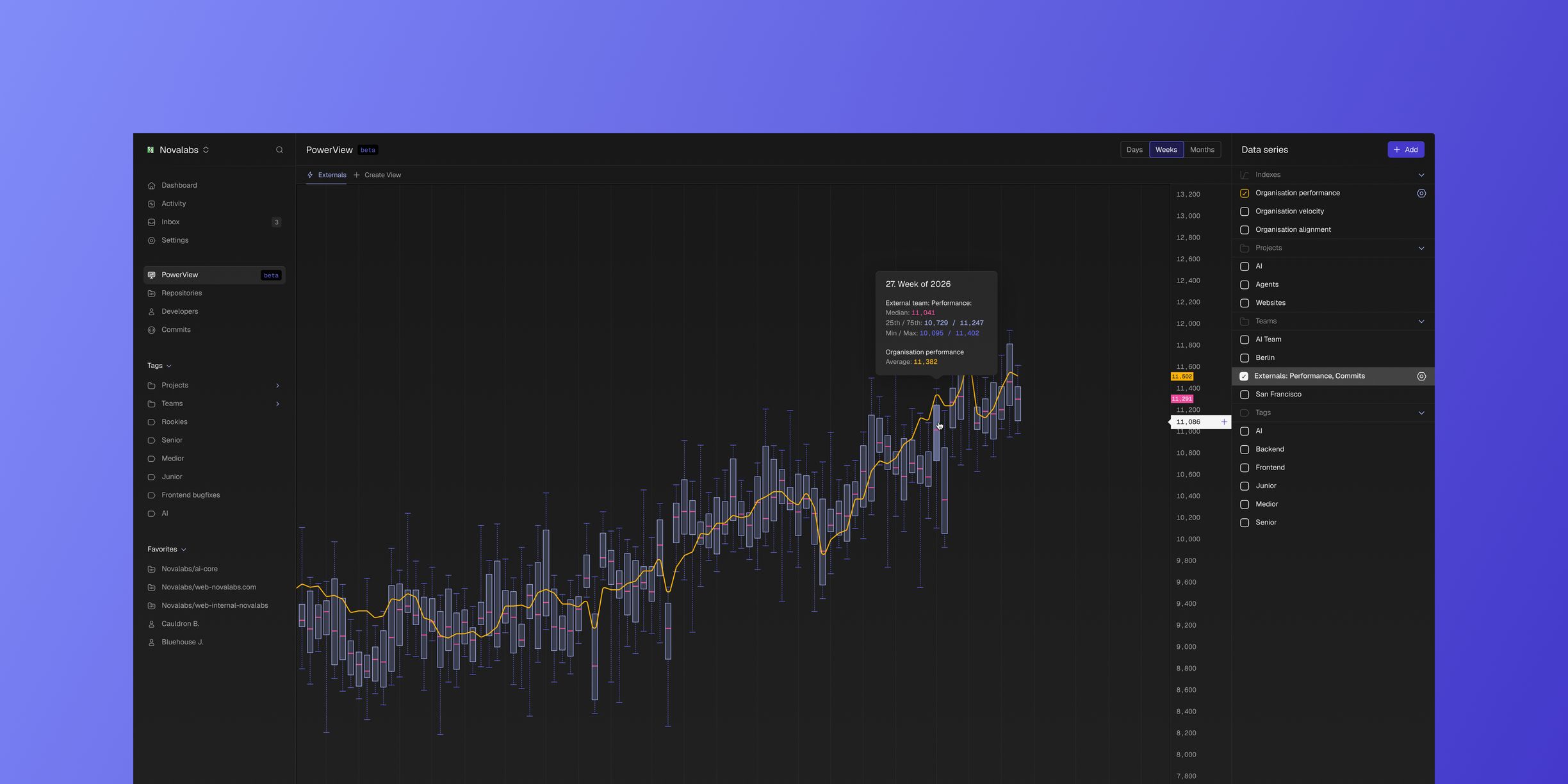
Design: Designed the entire product interface from scratch. Dashboards that visualize team performance, AI impact baselines, vendor comparisons, and executive-grade reports. The goal was to make complex engineering data feel clear and actionable – not just another analytics wall.
Development: Built parts of the frontend, translating designs into production code. Worked closely with the engineering team to ensure pixel-level fidelity and smooth interactions across the platform.
Mathematical Model: Co-created the scoring model that powers Navigara’s core value proposition. This is what turns raw commit data into meaningful performance metrics – connecting code activity to business impact through AI-driven analysis.
The Result
Navigara launched with $2.5M in seed funding and is used by companies like Kiwi.com, FTMO, and GTO Wizard. The platform proves what engineering teams have always struggled to quantify: whether their work actually moves the business forward.